Don't miss the latest SALE - All Digital Downloads $9.99!

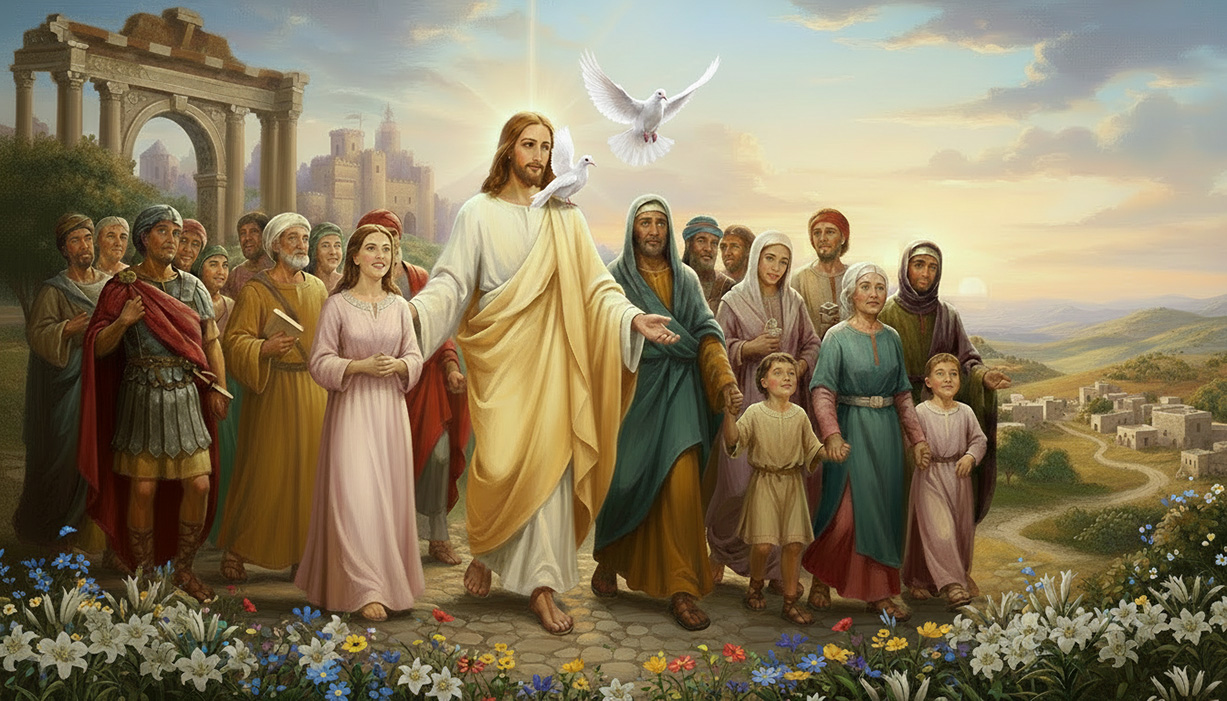
The Word Enters the World
Verbum caro factum est.
The Word became flesh.
(John 1:14)
The waiting does not end with an explanation. It ends with an arrival.
Not with thunder, not with spectacle, not with force, but with presence. The promise long carried through covenant, law, and prophecy does not descend from above in abstraction. It steps into history. It takes breath. It accepts limitation.
Et habitavit in nobis.
And He dwelt among us.
This is the turning point of the story. God does not remain distant, speaking only through signs and messengers. God enters the human condition fully, without reservation. Eternity touches time not to escape it, but to redeem it from within.
The Word that once spoke light into darkness now speaks through a human voice. The same intention that ordered creation now walks dusty roads, sits at shared tables, and looks directly into the eyes of the forgotten.
Lux in tenebris lucet, et tenebrae eam non comprehenderunt.
The light shines in the darkness, and the darkness did not overcome it.
(John 1:5)
This light does not erase suffering by command. It enters suffering and refuses to be extinguished by it. Jesus does not begin with power, but with proximity. He does not rule by distance, but by nearness.
In His teaching, the kingdom is not described as territory, but as transformation. The poor are named blessed. The meek are promised inheritance. Mercy is lifted higher than sacrifice. Love of neighbor is placed beside love of God, inseparable and equal.
Authority is redefined. Strength is revealed as service. Holiness is shown to be accessible, not guarded.
When Jesus heals, it is never only the body that is restored. Dignity returns. When He forgives, it is never denial of justice, but the opening of a future. When He calls disciples, He does not select the powerful, but the willing.
Non veni vocare iustos, sed peccatores.
I have not come to call the righteous, but sinners.
(Luke 5:32)
The incarnation teaches us that God’s answer to human fracture is not withdrawal, but communion. Not condemnation, but companionship. Jesus does not stand outside the human story correcting it. He steps inside and carries it forward.
In Him, the covenant becomes personal. The Law becomes lived. The prophetic hope takes a face.
Yet even here, the story does not rush. Growth is slow. Understanding unfolds gradually. Faith is learned through relationship, misunderstanding, and return. The disciples walk with Him, yet often fail to recognize who He is. Scripture allows this. It honors process.
Because revelation is not forced. It is received.
By entering the world this way, God affirms something essential: human life is worthy of divine presence. Time is worthy of eternity. The ordinary is capable of carrying the holy.
The Word becomes flesh not to escape humanity, but to reveal its true purpose.
And once again, the story does not close.
It deepens.
Because light has entered the world.
And the world must now decide how to respond.