Don't miss the latest SALE - All Digital Downloads $9.99!

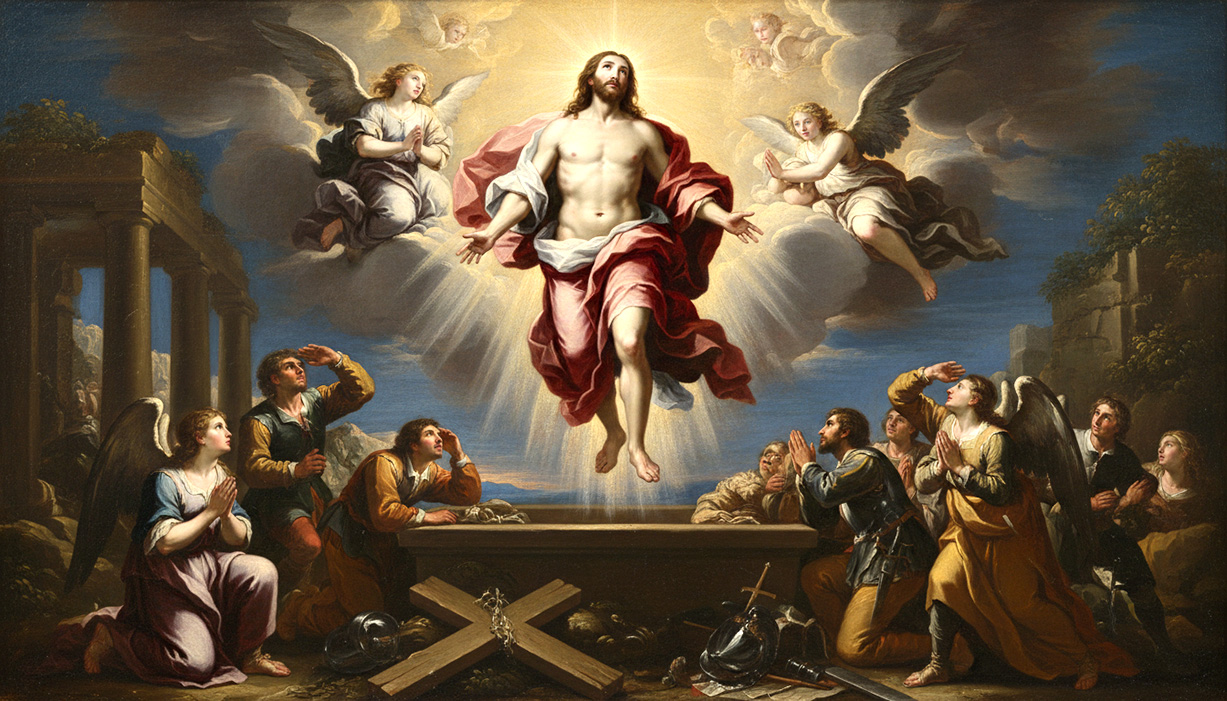
The Silence of the Tomb and the Dawn of Resurrection
Et tertia die resurrexit.
And on the third day He rose again.
The story does not rush past the silence.
Between the cross and the dawn, there is stillness. A sealed tomb. A body laid in the earth. Hopes held in suspension. Scripture allows this space to remain unfilled. It honors the weight of grief, the confusion of loss, the feeling that nothing more can be said.
For those who loved Him, faith now exists without sight. Promise remains, but certainty is absent. The world continues, yet something essential feels missing.
Posuerunt eum in monumento.
They placed Him in the tomb.
(Matthew 27:60)
This moment matters. The Christian story does not deny death. It enters it fully. The tomb is real. The silence is real. The waiting is real. Resurrection does not erase suffering retroactively. It meets it where it stands.
Then, without announcement, the stillness breaks.
Not with vengeance.
Not with spectacle.
But with life.
Surrexit, non est hic.
He has risen; He is not here.
(Mark 16:6)
The resurrection is not presented as an argument to be proven, but as an event to be encountered. The first witnesses are not rulers or scholars, but those who came expecting to mourn. They do not find explanation. They find absence.
The stone is rolled away not to let Jesus out, but to let witnesses in.
What rises is not a return to the past. The resurrected Christ is recognizable, yet changed. Continuity remains, but transformation is undeniable. Death has not been reversed. It has been passed through.
O mors, ubi est victoria tua?
O death, where is your victory?
(1 Corinthians 15:55)
Resurrection reframes everything that came before it. The cross is revealed not as defeat, but as gift. The silence is revealed not as abandonment, but as passage. Hope is no longer theoretical. It has form.
Yet even now, recognition comes slowly. Mary mistakes Him for a gardener. The disciples hesitate. Doubt lingers. Scripture does not shame this. It shows us that resurrection is not immediately obvious. Faith learns to see again.
Jesus does not scold uncertainty. He speaks names. He breaks bread. He invites touch. He meets each person where belief is still forming.
The resurrection does not remove scars. It carries them. The wounds remain visible, not as signs of failure, but as marks of love endured. Glory does not erase suffering. It transfigures it.
With resurrection, the story opens outward. What began in a garden now moves toward the world. Life is no longer confined to one place, one people, one moment. The promise extends beyond the tomb.
Light has entered darkness.
Love has entered death.
And death has not endured.
The dawn does not cancel the night.
It answers it.
And the story, once more, continues.