Don't miss the latest SALE - All Digital Downloads $9.99!

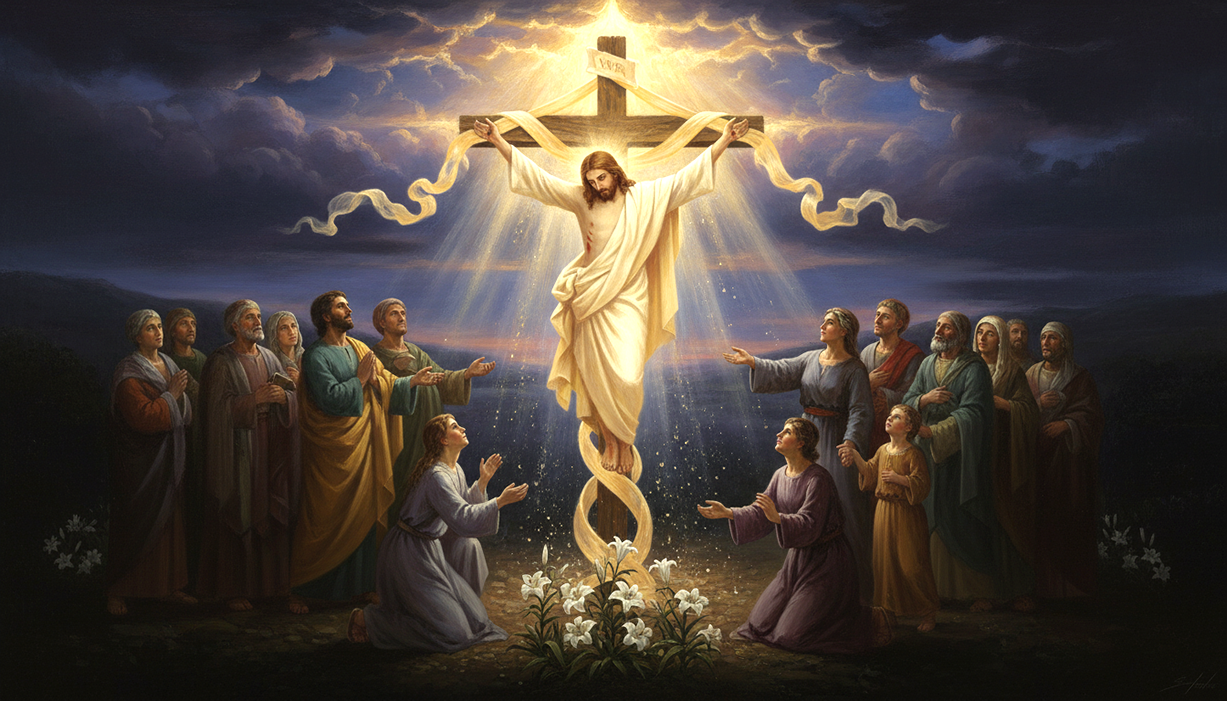
The Way of the Cross
Dilexit eos usque in finem.
He loved them to the end.
(John 13:1)
The story turns not away from suffering, but toward it.
Jesus does not retreat when resistance grows. He does not soften His message to preserve safety. Love, once fully revealed, cannot remain neutral. It challenges power, unsettles comfort, and exposes fear. The cross does not appear as interruption. It emerges as consequence.
What began in light now moves into shadow.
Yet even here, nothing is abandoned. The same presence that healed and taught now remains faithful under accusation, silence, and pain. Jesus walks the road of the cross not as victim of circumstance alone, but as one who chooses not to withdraw love when it becomes costly.
Non mea voluntas, sed tua fiat.
Not my will, but yours be done.
(Luke 22:42)
In Gethsemane, obedience is shown not as ease, but as surrender. Fear is not denied. Grief is not hidden. Faith is revealed in the decision to remain open to God even when the outcome is suffering.
The cross is not a spectacle of cruelty for its own sake. It is the place where human violence, injustice, and betrayal are fully exposed. Power is exercised against innocence. Truth is silenced. The innocent is condemned so that order may appear preserved.
Yet Scripture refuses to let this moment be interpreted only through human failure.
Pater, dimitte illis, non enim sciunt quid faciunt.
Father, forgive them, for they do not know what they are doing.
(Luke 23:34)
Here, forgiveness is spoken not after repentance, but in the midst of harm. Mercy does not wait for worthiness. Love does not retreat behind justice. The cross becomes the place where God responds to sin not with annihilation, but with self-giving.
Jesus does not save by escaping death. He enters it.
And in doing so, He transforms its meaning. Death is no longer the final word, but a passage. Suffering is no longer proof of abandonment, but a place where God has already been present.
Consummatum est.
It is finished.
(John 19:30)
These words do not declare defeat. They declare completion. The work begun at creation, carried through covenant, spoken by prophets, and embodied in the Word, reaches its fullness here. Love has been given without reserve.
The cross teaches that faithfulness is not measured by success, but by truthfulness. By remaining present. By refusing to abandon love when it costs everything.
For those who follow, the way of the cross is not an invitation to seek suffering, but a call to remain faithful when love becomes demanding. It asks not for heroic strength, but for honest trust.
The cross stands not as the end of the story, but as the threshold.
Because what appears finished is, in truth, only waiting.
And the silence that follows is not empty.
It is pregnant with promise.